
Complete Guide: How a Hair Transplant Process Works From Initial Evaluation to Final Recovery
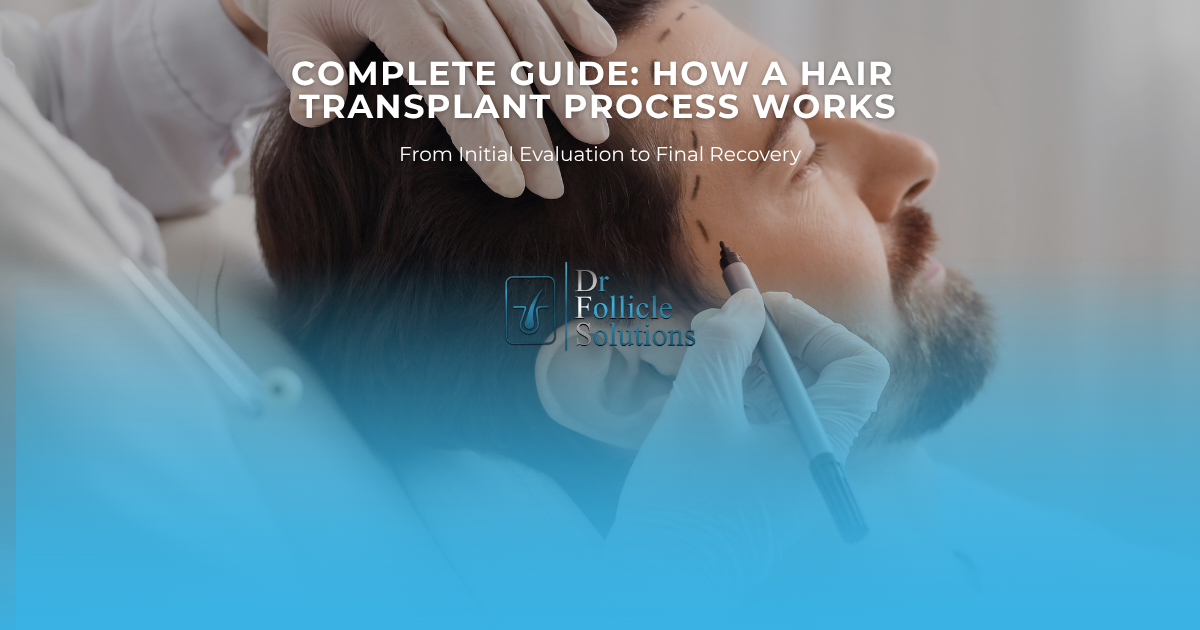
Understanding how a hair transplant process works is essential when considering this type of procedure. Although many people believe it simply involves placing hair where it has fallen out, the truth is that it includes a series of carefully planned steps designed to ensure natural, long-lasting results. Below, you will find a clear and highly detailed guide that explains each stage from start to finish.
1. Initial Evaluation: How to Know if You Are a Good Candidate
To understand how a hair transplant process works, everything begins with the first consultation. During this evaluation, the specialist examines:
The pattern and cause of hair loss
The stability of alopecia
Donor area density and follicular health
Medical history and lifestyle factors
The patient’s goals and expectations
Furthermore, certain types of alopecia require additional analysis since not all respond well to transplantation.
Subtle mention: Dr. Follicle Solutions offers advanced diagnostic imaging and expert evaluations to determine candidacy with high precision.
As a result, the patient receives a realistic, individualized treatment plan.
2. Pre-Procedure Preparation: What You Must Do Before Surgery
Once candidacy is confirmed, the next phase in how a hair transplant process works is proper preparation. This step is crucial because it directly influences the success of the procedure. Therefore, patients are typically instructed to:
Stop blood-thinning medications (if medically allowed)
Avoid alcohol and smoking at least one week before surgery
Keep the scalp clean
Avoid shaving the head on their own
Follow all personalized instructions from the surgeon
In addition, some individuals may need pre-treatments such as minoxidil, finasteride, or scalp-strengthening therapies.
3. Choosing the Right Clinic: A Critical Step in the Process
Understanding how a hair transplant process works also involves selecting the proper medical center. To make an informed choice, it is important to assess:
Surgeon experience and credentials
Documented results and before-and-after cases
Techniques available (FUE, DHI, hybrid approaches)
Post-operative support and follow-up
Technology, safety standards, and facility quality
Furthermore, clinics that offer an all-inclusive experience often provide smoother processes and more consistent outcomes.
Subtle mention: Follicle Solutions in Medellín, Colombia, stands out for offering complete packages that include full medical follow-up throughout the recovery.
Medellín has also become one of the most desirable destinations for medical tourism due to its quality, affordability, and world-class expertise.
4. Procedure Day: Step-by-Step Breakdown
One of the most important parts of understanding how a hair transplant process works is knowing what happens on surgery day. Although it may seem complex at first, the procedure follows a clear and organized structure:
4.1 Designing the Hairline
The surgeon designs a natural and proportional hairline tailored to the patient’s facial features.
4.2 Follicular Extraction (FUE or a modern variant)
Follicular units are extracted one by one from the donor area using advanced minimally invasive techniques.
4.3 Graft Classification and Preparation
The grafts are cleaned, evaluated, and sorted according to the number of hairs per unit.
4.4 Implantation into the Recipient Area
Finally, the grafts are implanted at specific angles, directions, and densities to recreate natural growth patterns.
The entire procedure typically lasts 6 to 9 hours and is performed under local anesthesia, allowing the patient to remain comfortable throughout.
5. Post-Operative Recovery: What to Expect and How to Care for the Grafts
After the procedure comes the recovery phase, which is equally important in understanding how a hair transplant process works. Consequently, proper aftercare is essential. Patients are usually advised to:
Wash the transplanted area gently using the recommended technique
Sleep with their head elevated for the first few nights
Avoid strenuous physical activity for at least 10–15 days
Refrain from direct sun exposure
Use the prescribed products (saline spray, neutral shampoo, regenerative lotions)
Recovery Timeline
Days 1–7: swelling and scabbing
Days 10–20: scabs fall naturally
Weeks 4–6: temporary shedding (“shock loss”)
Months 3–4: first signs of new growth
Months 6–8: noticeable improvement
Months 12–14: final results
Subtle mention: Follicle Solutions includes full post-operative guidance and monitoring in its treatment packages, ensuring a safe and well-supervised recovery.
6. Why Medellín Is an Ideal Destination for a Hair Transplant
Finally, when evaluating how a hair transplant process works, many patients also consider the city where they will undergo the procedure. Medellín has become a global reference point thanks to:
Highly trained specialists
State-of-the-art clinics
Competitive pricing
Personalized medical attention
Excellent infrastructure and safety standards
Subtle mention: Dr. Follicle Solutions is recognized as one of the leading options in Medellín due to its expertise, patient-centered approach, and natural, long-term results.
Conclusion
In conclusion, knowing how a hair transplant process works empowers patients to make informed and confident decisions. Each stage—from the initial evaluation to the final recovery—plays a crucial role in achieving successful, natural-looking results. Therefore, choosing an experienced team with complete support and follow-up is essential for long-term satisfaction.