
Why Is Hair Falling Out in Young Men? (20s–30s Guide)
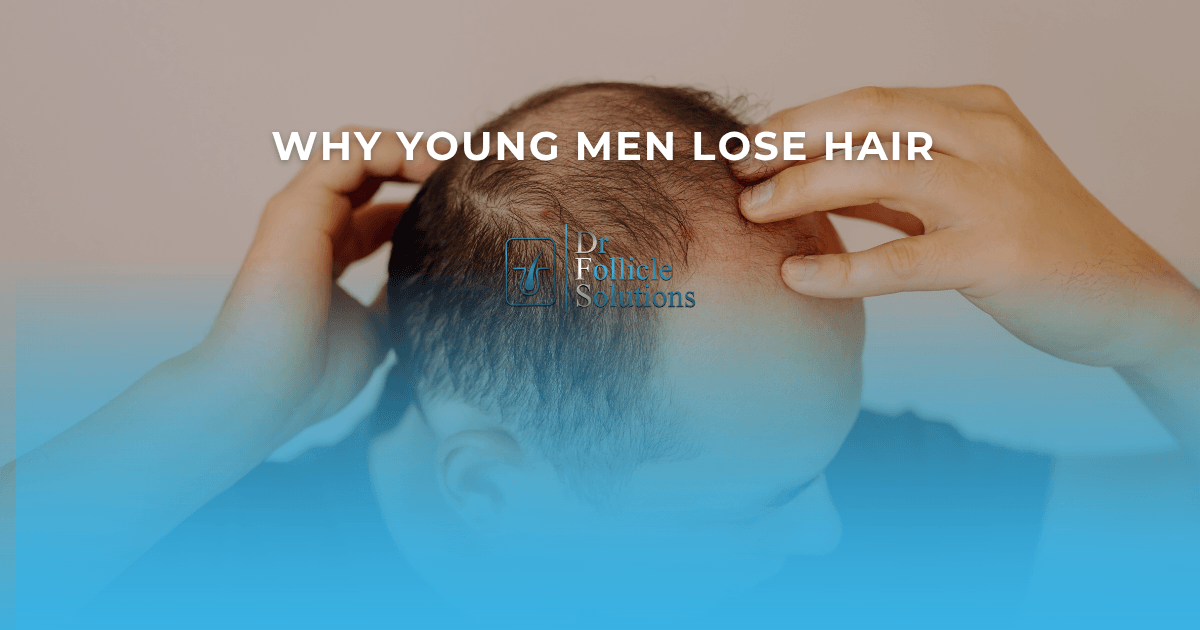
Hair loss is no longer something that only affects older men. In fact, a large percentage of men begin noticing thinning, receding hairlines, or excessive shedding as early as their early 20s.
If you’re asking yourself “why is my hair falling out at 25?”, you’re not alone—and more importantly, there are clear reasons and solutions.
Understanding the cause is the first step to stopping progression and, in many cases, restoring your hair.
The Most Common Causes of Hair Loss in Young Men
1. Genetic Hair Loss (Male Pattern Baldness)
The leading cause of hair loss in young men is male pattern baldness, medically known as androgenetic alopecia.
It is:
Hereditary (runs in families)
Progressive over time
Triggered by sensitivity to DHT (dihydrotestosterone)
How it starts:
Receding hairline (temples)
Thinning at the crown
Gradual loss of density
👉 If your father or grandfather experienced hair loss early, there’s a strong chance you might too.
2. Hormonal Sensitivity (DHT)
DHT is a hormone derived from testosterone. In some men, hair follicles are genetically sensitive to DHT.
What happens:
Follicles shrink over time
Hair becomes thinner
Eventually stops growing
👉 This is the biological mechanism behind most early hair loss cases.
3. Stress-Induced Hair Loss (Telogen Effluvium)
High levels of physical or emotional stress can push hair into a resting phase, causing sudden shedding.
Common triggers:
Work pressure
Anxiety or depression
Illness or surgery
Rapid lifestyle changes
👉 Unlike genetic hair loss, this type is often reversible.
4. Poor Nutrition & Deficiencies
Hair is highly sensitive to what you eat. Nutrient deficiencies can weaken follicles and accelerate shedding.
Key nutrients for hair health:
Protein
Iron
Zinc
Biotin
Vitamin D
👉 Diets that are too restrictive or unbalanced can contribute to early thinning.
5. Aggressive Hair Practices
Certain habits can damage your hair over time:
Excessive heat styling
Tight hairstyles (traction alopecia)
Harsh chemicals or treatments
👉 While these don’t cause genetic baldness, they can worsen the appearance of hair loss.
6. Medical Conditions
In some cases, hair loss may be linked to underlying conditions such as:
Thyroid disorders
Autoimmune diseases
Scalp infections
👉 If hair loss is sudden or patchy, a medical evaluation is essential.
Early Signs of Hair Loss You Shouldn’t Ignore
Recognizing the early signs can make a huge difference in treatment success.
Watch for:
Receding temples
Thinning crown area
Excessive hair shedding in the shower
Noticeable decrease in hair volume
Hair becoming finer over time
👉 The earlier you act, the more options you have.
Can Hair Loss Be Reversed?
This depends on the stage and cause.
In early stages:
Hair loss can often be slowed or stabilized with:
FDA-approved medications (Minoxidil, Finasteride)
PRP (Platelet-Rich Plasma) therapy
Lifestyle improvements
In advanced stages:
When hair follicles are no longer active, regrowth is not possible naturally.
👉 At this stage, the most effective solution is a hair transplant.
A hair transplant may be the best option if:
Hair loss is clearly visible
You have receding hairline or bald spots
Non-surgical treatments are no longer effective
You want a permanent solution
Modern techniques such as FUE (Follicular Unit Extraction) provide:
Natural-looking results
Minimal scarring
Long-lasting outcomes
What Happens If You Don’t Treat Hair Loss?
Hair loss caused by genetics is progressive.
Without treatment:
Hairline continues to recede
Bald areas expand
Hair becomes thinner overall
👉 Waiting too long can limit your treatment options and results.
Personalized Diagnosis Matters
Not all hair loss is the same.
A proper evaluation can determine:
The exact cause of your hair loss
The stage you’re in
The most effective treatment plan
👉 The right diagnosis early on can save you time, money, and hair.
Frequently Asked Questions
Is it normal to lose hair in your 20s?
Yes, especially if you have a genetic predisposition to male pattern baldness.
Can hair grow back after thinning?
Only if the follicle is still active. Early intervention is key.
How do I know if my hair loss is genetic?
If it follows a pattern (receding hairline or crown thinning), it likely is.
Does stress cause permanent hair loss?
No, but it can accelerate underlying genetic conditions.